The Storelli Chalet.
Public gardens · Fabriano
It is the early decades of the twentieth century when Antonio Storelli — having recently taken over the running of the family’s historic Caffè along the Corso — decides to open a small kiosk inside the Regina Margherita gardens. It originally stands not far from the canapés, the stone benches set along the avenue just outside Porta Cervara, where the people of Fabriano are in the habit of gathering, especially in the warmer months, to chat and “take the cool air”.
An advertisement from 1912 describes the kiosk as “small but exceptionally well stocked”, made “wonderfully appealing” by “the exquisite quality of its drinks and ice creams, as of all its other offerings”. And “for just a few centesimi, it quenches, sweetens, restores”.
The “Storelli firm” was, at the time, renowned not only for its delicious ice cream — made in-house and packed into the sorbet tubs on the vending carts — but also for its “refreshments”, much admired for their quality and refinement. In keeping with the spirit of the belle époque, the public gardens regularly hosted musical concerts and other cultural entertainments on Sundays and holidays, and above all throughout the summer.
Once the years of the First World War had passed, the business kept growing and prospering — so much so that Storelli, the shrewd entrepreneur, decided to commission a new and larger Chalet, the one we can still admire today, big enough to welcome its many patrons and to host small orchestras and the singing of romanze.
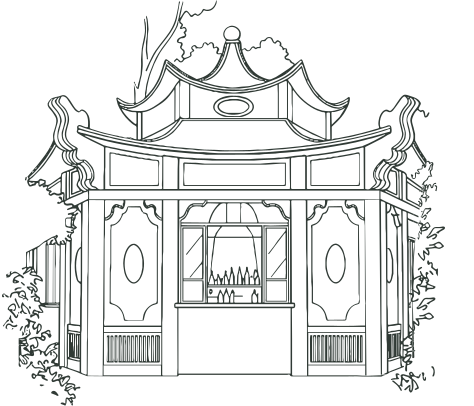
The project was entrusted to Giulio Meloni, a respected architect from Fabriano, who chose to design the building in an eclectic style with an exotic flavour — a personal, versatile reinterpretation of the fashion of the day. Its silhouette echoes the lines of a pavilion, a structure typical of traditional Chinese architecture, with the customary square or octagonal plan usually intended as a place of leisure and rest.
Its unusual “pagoda” and the refined exterior details drew the attention of fellow townsfolk, who — after the initial astonishment and chatter — soon found themselves queuing in great numbers to claim one of the coveted seats among the tables.
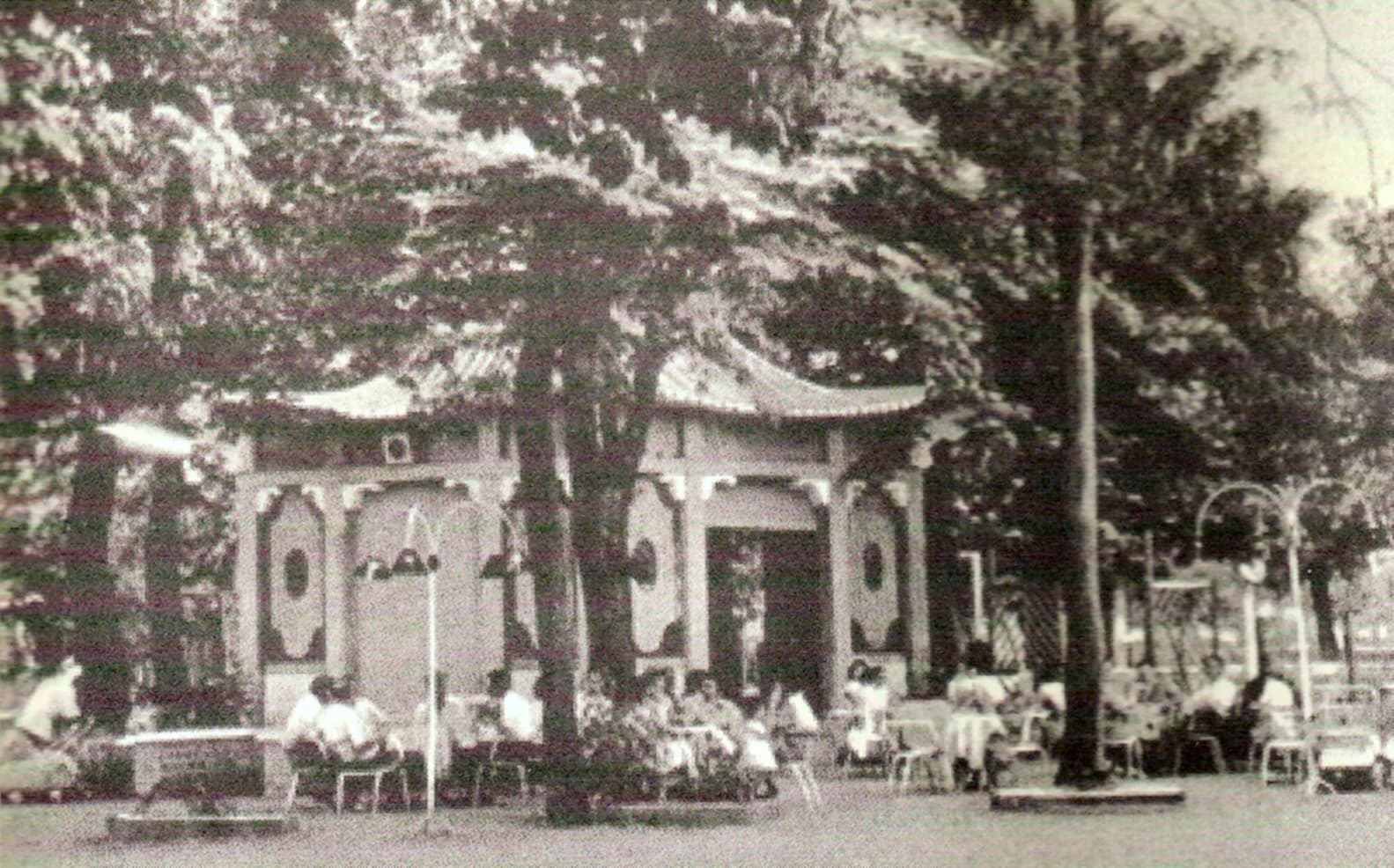
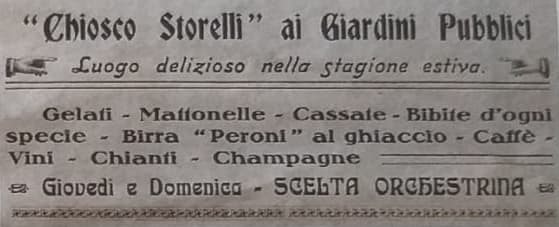
Opened between June and July 1924, a newspaper of the period reads: “New Storelli Kiosk at the Public Garden — A delightful spot in the summer season — Ice creams — Drinks of every kind — Beer — Sparkling wines — Lavish illumination — Music.” And again, in those same years, “The Chalet of the Public Gardens stays open every afternoon, with impeccable service. Musical entertainment Thursday and Sunday.”
In 1947, after Storelli’s death, the venue passed to Michelino Anselmi, a well-known merchant from the old town, and gradually became one of the favourite meeting places for the city’s young people. Its broad dance floor was, in the 1950s, the stage for fierce dance contests — to the beat of Boogie Woogie, Swing and Rock ’n’ Roll, right up until the Twist arrived in the decade that followed. More recent memories belong to the long tenure of the Coccia family: amid foosball and ping-pong rivalries — and the summer flings that came with them — generations of fabrianesi grew up here.
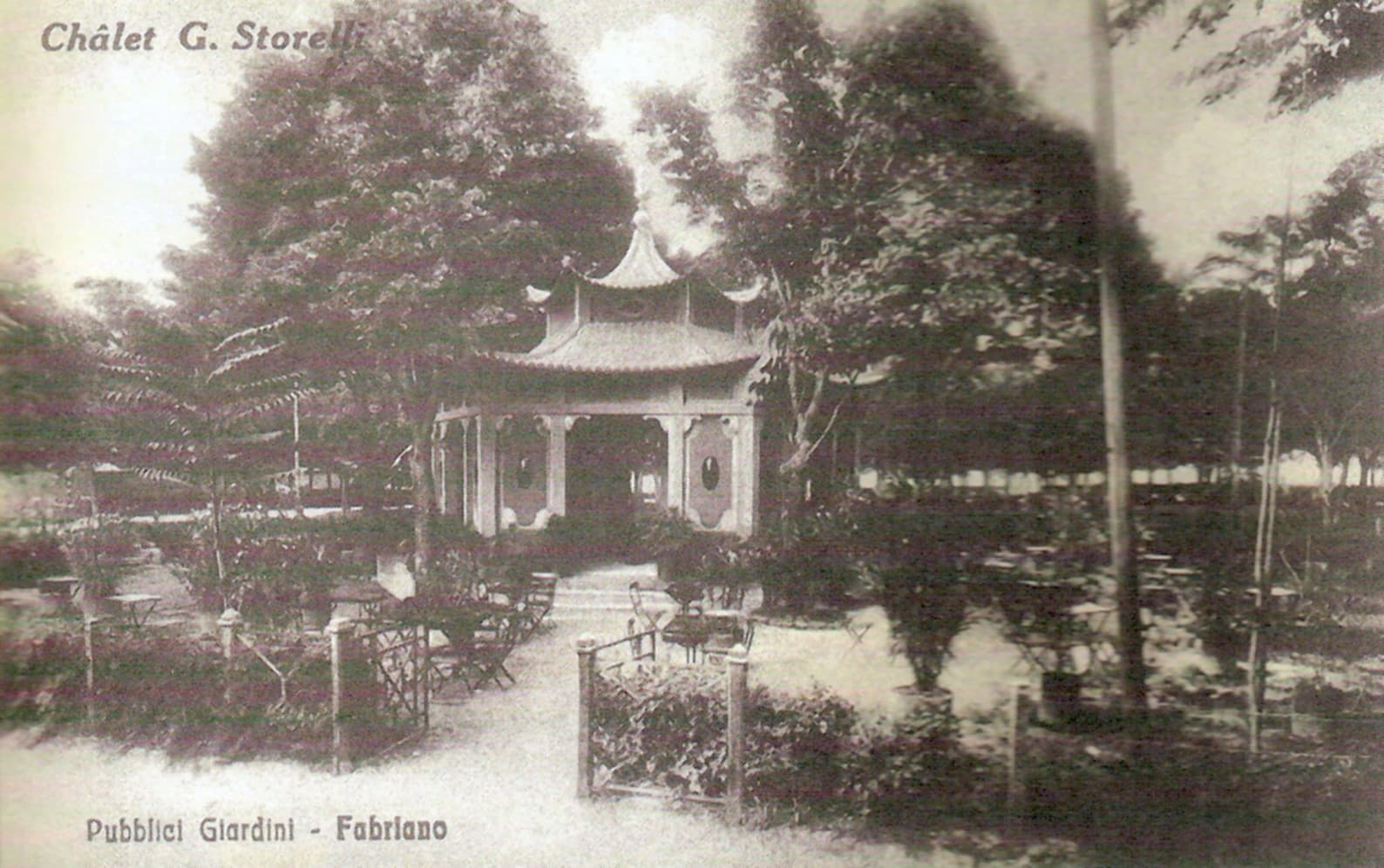
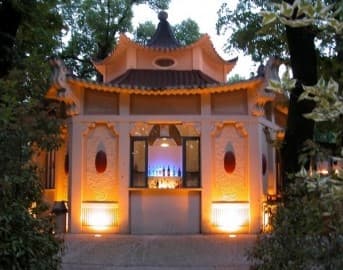
Then came the two-thousands, which saw the building — now property of the municipality — undergo major works: a careful programme of restoration and conservation, paired with new, more modern furnishings and elegant lighting installations. Reopened to the public on 3 July 2003, it remains today — through a succession of operators and managements — a steady fixture in the lives of new generations, who still flock to it. So much so that it’s hardly out of place to repeat the slogan from a recent summer: “What is a summer, anyway, without the Chalet?”.